Proud to Be Named ERF Best in Practice: Healthcare 2025

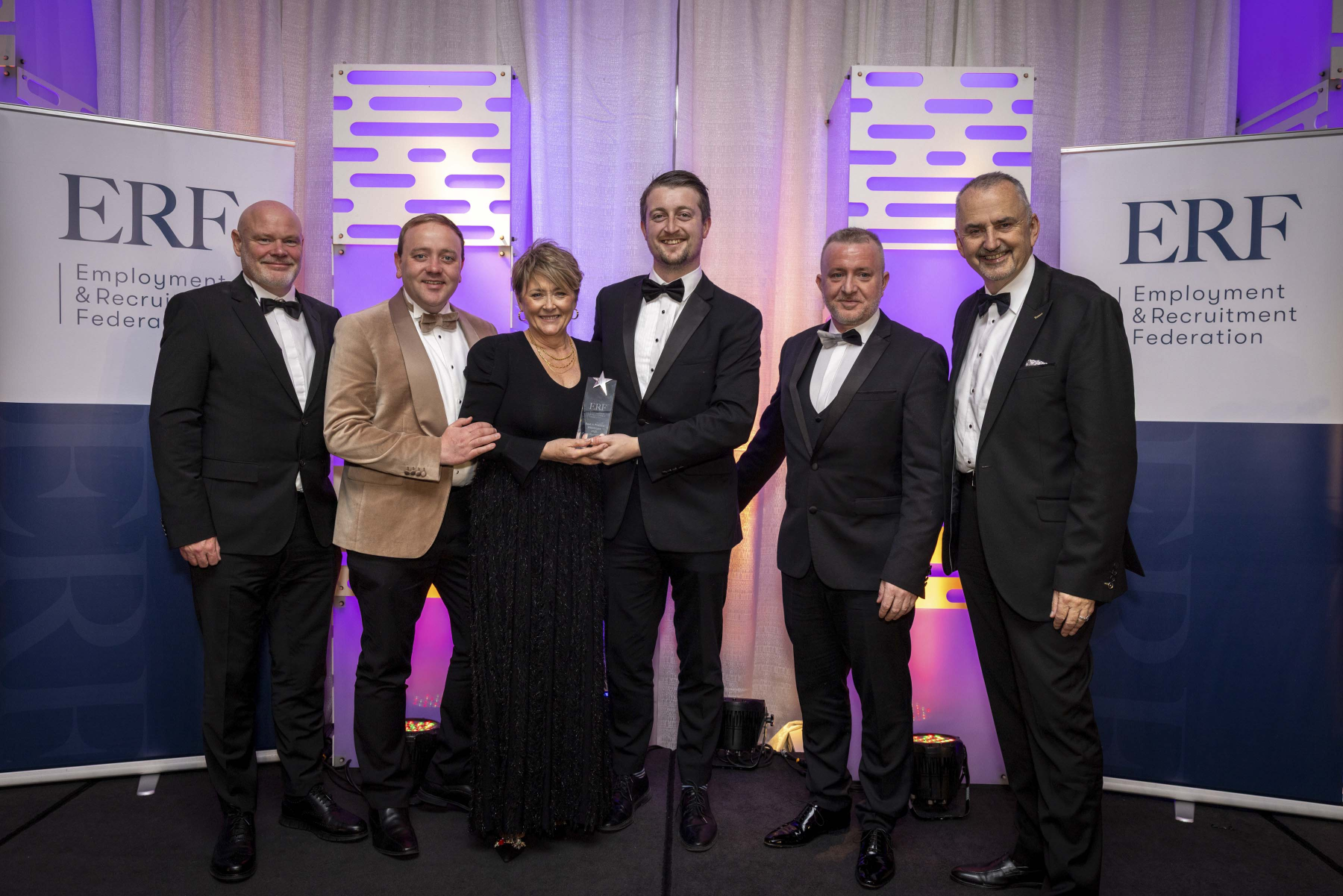
We are incredibly proud to share that we have been awarded ERF Best in Practice: Healthcare – a milestone moment for our Healthcare division and a powerful reflection of the standards we set at Excel Healthcare.

This award recognises the unwavering commitment of our Healthcare team, who coordinate and support more than 9,000 temporary staff, 24/7, ensuring hospitals, care facilities, and healthcare partners always have access to the skilled professionals they critically need. From urgent last-minute cover to long-term workforce solutions, our focus remains the same: delivering safe, reliable, and high-quality staffing with people at the heart of everything we do.

A huge shout-out to our Future Proof Training Team, whose dedication ensures every candidate is equipped with the skills, confidence, and training to thrive.

We are delighted that the Excel Recruitment Group also received Best in Practice: Catering, Events & Hospitality Agency at the same awards ceremony, for the second consecutive year! While this recognition highlights the breadth of our expertise, our Healthcare award represents a significant and exciting step forward for Excel Healthcare.

We extend our sincere thanks to our Healthcare clients and candidates. Your trust, collaboration, and ongoing support have been the cornerstone of this achievement, and we are deeply grateful for the partnerships that drive our success.

And finally, congratulations to all the ERF Award winners! Being recognised alongside such exceptional industry peers is a true honour, and we look forward to building on this momentum throughout 2026 and beyond.

Excel Recruitment Group Achieves ISO 9001 Certification

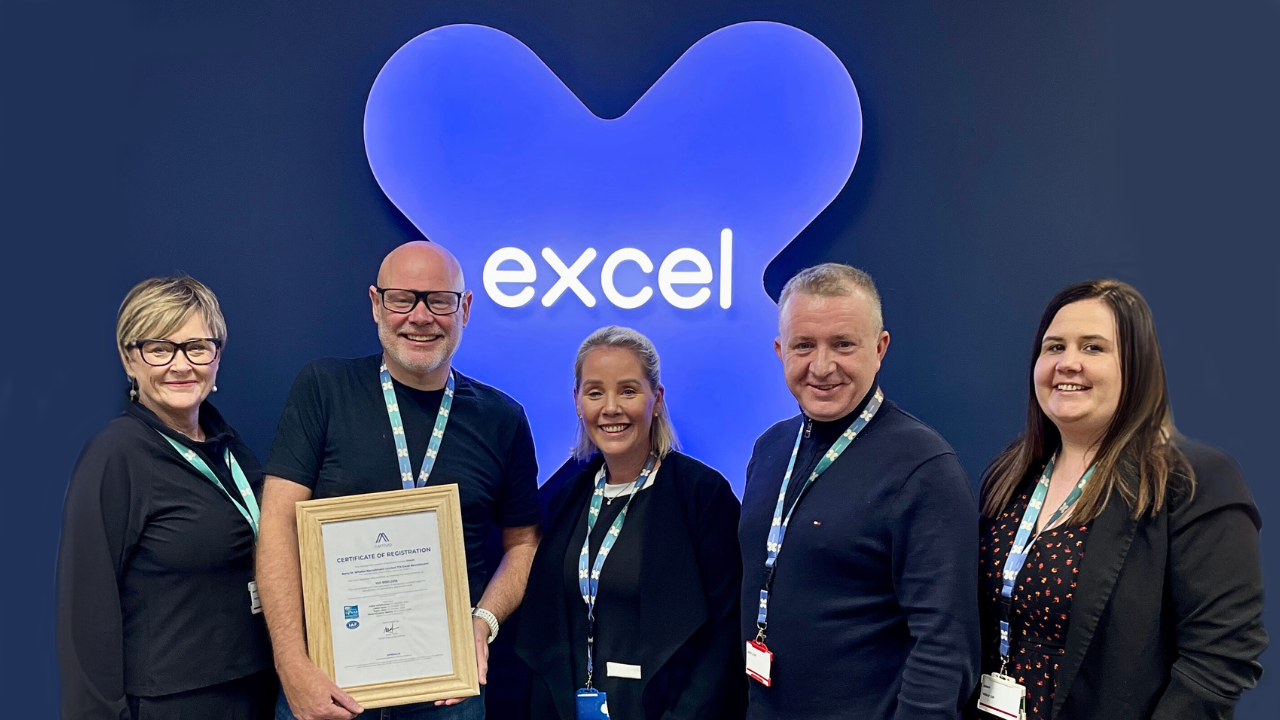
We are proud to announce that the Excel Recruitment Group has successfully achieved ISO 9001 Certification — the internationally recognised global standard for quality management systems.

This significant milestone highlights our ongoing commitment to maintaining the highest standards of quality, consistency, and continuous improvement across all areas of our operations.

Achieving this certification required extensive collaboration and effort throughout the organisation. We would like to extend our sincere thanks to our Compliance Team, Finance Team, Senior Leadership, and all colleagues who contributed to meeting this rigorous standard. A special thank you goes to Jennifer Maher, who led and managed the certification process from start to finish.

The certification process included an independent audit of our internal systems and procedures, confirming that our operations meet the stringent requirements of ISO 9001:2015. This accomplishment is a testament to the professionalism, diligence, and shared commitment of our entire team in delivering excellence to our clients, candidates, and partners.

We are delighted to have reached this important benchmark and look forward to continuing to uphold the principles of quality and integrity that define Excel.

Pictured left to right: Martina Young, Barry Whelan, Jennifer Maher, Shane McLave, and Ciara Connolly.

Hospital Nurse

How To Get A Hospital Nurse Job In Ireland

Want to work as a nurse in hospitals in Ireland?

Do you have previous hospital experience as a nurse outside of Ireland and are now in Ireland seeking similar opportunities?

Here is how to get a hospital nurse job in Ireland:

For many nurses, their first job in Ireland is often in a nursing home or residential care setting. Transitioning to hospitals and clinics can initially be challenging.

To work in these environments, you’ll need to either hold a Stamp 4 (or be in the process of obtaining one) or have an EU passport.

By working with Excel through agency nursing shifts, you can gain valuable experience across various settings, including acute hospital environments.

To best prepare yourself here is a list of some courses which will help you in this process:

  • Venepuncture, Cannulation, and IV Management: Venepuncture and cannulation are essential skills in a hospital setting. These techniques are critical for establishing vascular access or collecting blood samples for various tests, as well as for administering IV fluids and medications. Mastery of these skills is a clinical priority for registered nurses. In Ireland, several providers offer courses on venepuncture and cannulation, making them highly beneficial for nurses aiming to work in hospital environments.
  • INEWS (Irish National Early Warning System): All nurses are required to complete the ‘Introduction to the Irish National Early Warning System (INEWS)’ certification via HSELand. This course emphasises clinical judgment and supports decision-making by helping nurses anticipate and respond to patient deterioration. The INEWS framework guides staff in assessing patients based on vital signs such as: Respiratory rate, SpO₂ and oxygen requirements, Heart rate, Blood pressure, Temperature, and Patient alertness. It prepares healthcare professionals to anticipate, recognise, escalate, respond to, and evaluate signs of patient deterioration. Familiarity and confidence in using the INEWS document are crucial. This training takes approximately 1 hour to complete on hseland.ie.
  • Medication Management: There may be a difference in the type of medications you are dispensing in a nursing home and a hospital. At times, care homes may also use blister packs however this practice is being withdrawn in many places.
    Medications in a hospital come in various forms – tablets, liquids, IVS, inhalers, suppositories, creams and patches as well as different types of injections – SC or IM – registered nurses are required to be competent in administration of all types of medication. The different groups of acute medications may include PPIs, various analgesia, statins, oral anticoagulants, antibiotics, antiarrhythmics, antiemetics, diuretics, immunosuppressants, hypoglycaemics among many others.
    It is vital to note, that some medications require separate monitoring: blood pressure or heart rate before administering certain cardiac medication, checking a patient’s blood sugar level before a meal, while others may require a pre-dose blood test for certain antibiotics or anti-rejection transplant medication.

It is also important to remember the Ten ‘Rights’ of Medicine Administration:

  • Right patient
  • Right reason
  • Right drug
  • Right route
  • Right time
  • Right dose
  • Right form
  • Right action
  • Right documentation
  • Right response

Excel is here to support you in completing these courses and can also help you secure an acute hospital job in your area. Transitioning from a nursing home to an acute setting can be challenging, so we recommend starting with a few agency shifts in hospital environments through Excel. This approach allows you to gradually adjust and become familiar with the differences in settings.

For more information about working as a hospital nurse or booking the courses mentioned above, please contact 01 871 7666. Dagmara, a qualified nurse at Excel, is available to guide you through your journey.

Common Interview questions for nurses

Common Interview Questions for Nurses and How to Answer Them

When preparing for a nursing job interview, it’s crucial to anticipate the types of questions you may be asked and to plan how you’ll respond with confidence. Whether you’re a new graduate nurse entering the field or a seasoned RGN aiming for a new role, interview questions often focus on your clinical experience, problem-solving skills, and ability to provide compassionate patient care. In this guide, we’ll break down the most common interview questions for nurses and how best to answer them.

Tell me about yourself and your nursing experience? 

When responding to this question, be honest and show your passion for nursing. Start with a brief overview of your background, including your educational qualifications and key experiences. Outline your nursing journey chronologically, highlighting major roles and accomplishments. Demonstrate your passion for nursing by explaining what inspired you to pursue this career and how your experiences have shaped your professional approach. 

Example Answer: I’ve always been passionate about healthcare, which led me to pursue a degree in nursing. Over the past five years, I’ve worked in various settings, including acute care and long-term care. In my most recent role, I managed a team of nurses and was involved in developing patient care plans. My experiences have deepened my commitment to patient-centred care and have equipped me with a diverse skill set that I’m excited to bring with me in this role. 

What are your strengths and weaknesses as a nurse? 

When discussing strengths, focus on qualities that make you an exceptional nurse, and link these to the nursing role you are applying for. When discussing weaknesses, choose an area of improvement that you’re actively working on. Highlight the steps you’ve taken to address this weakness and any progress you’ve made. 

Example Answer: One of my strengths is my ability to remain calm under pressure, which helps me provide effective care during critical situations. I’m also a strong communicator, which has been essential in coordinating with multidisciplinary teams. A weakness I’ve identified is my tendency to take on too many tasks simultaneously. I’m working on this by improving my time management skills and using tools to better prioritise my workload. 

Do you have any questions for us? 

This is your opportunity to demonstrate your genuine interest in the role and to determine if the organisation is the right fit for you. Prepare thoughtful questions that reflect your curiosity about the team, the work environment, and the expectations for the role. 

  • What is your culture/team like? 
  • How do you like working here? 
  • What qualities are you looking for? 
  • What advice would you give to a nurse who is new to your unit? 
  • What are the next steps in the interview process? 
  • What are the best things I can do to succeed in this unit? 
  • Are there any mentorship opportunities or continued support? 
  • What are some major challenges your nurses currently face? 

Need more help? 

Excel Healthcare is here to support you throughout your interview preparation and CV enhancement. If you’d like personalised assistance with your CV or interview coaching, simply click here and send us your CV for expert review. Our recruiters are dedicated to helping you present your experience in the best possible light and achieve your career goals. 
Critical Skills Employment Permit Changes

Changes to the Critical Skills Employment Permit

As of the 2nd September 2024 the Critical Skills Employment Permit duration has been reduced from 24 months to 9 months.

Here’s what you need to know: 

When you are changing jobs, you can change employers within the same occupation classification without needing a new permit application. This means if you’re a Healthcare Assistant (HCA),  you can move to a different HCA role, if you are a nurse, you can move into another nurse role.  

From September any nurse or healthcare professional hired under a critical skills Visa can request a change in employer after 9 months of employment.  

The following conditions apply: 

  • As the permit holder, you can make a maximum of 3 applications for a change of employer. 
  • A new contract of employment signed by both you and your new employer must be submitted. 
  • You must start employment with your new employer within 1 month of the new permit being issued. 

You will be eligible for Stamp 4 after 21 months of working in Ireland. When you are on Stamp 4 you can change jobs without needing this employment permit. 

Ensure you meet these requirements to comply with the updated permit rules.  

For more information, click here.

If  you are looking for your next HCA or Nursing opportunity call us on 01 871 7666. Or email info@excelhealthcare.com for a call back.  

HSE RGN's

HSE Nurse Jobs with Excel Healthcare Recruitment  

HSE Nurse Jobs with Excel Healthcare Recruitment  

Excel Healthcare is now recruiting Registered Nurses to work in HSE facilities across Ireland. As a supplier to the HSE Excel provides nurses to acute, mental health, community nursing and other healthcare facilities throughout Ireland. 

If you are looking to gain experience in the public health sector and want to have a flexible work schedule, this will be the perfect job for you. There are so many opportunities and working with Excel gives you the opportunity to work in various settings to expand your experience.  

HSE nursing jobs: 

  • General nurse positions in community nursing homes, acute hospitals and theatre 
  • General nurse jobs for vaccinators  
  • Specialised nursing posts 
  • General  
  • Oncology 
  • Pediatric  
  • Neonatal  
  • Maternity 
  • Community (no public health nurse experience needed)  
  • Various other wards 

Working with Excel gives you flexibility to choose the days and locations where and when you want to work. You can also do a mix of public and private shifts. Career growth opportunities are endless and Excel provide any additional training you may need or organise onsite inductions.  

Requirements of nurses to work in the HSE with Excel:  

  • Registered Nurse with active NMBI Pin
  • Must hold appropriate work authorisation in Ireland (EU/EEA citizenship or stamp 1G, 2 or 4). We can not accept Stamp 1’s as we are not at this stage processing visa’s
  • Experience in acute settings in Ireland or abroad  
  • Have all relevant qualifications and certificates up to date
  • Strong communication skills

Our sign up process is easy and you will have a designated consultant to guide you at every stage. Weekly pay and many benefits including holiday pay, refer a friend scheme and more.  

Enquire today to get started, click below or call 018717666. Or email info@excelrecruitment.com for a call back.  

Nurse

How to Become a Nurse in Ireland When Qualified Outside the EU

Are you a qualified nurse from outside the EU looking to start your nursing career in Ireland?

Ireland offers a promising opportunity for international nurses to work in a thriving healthcare system. However, there are specific steps and requirements you need to meet to ensure a smooth transition.

Recognition of Qualifications

First, you must be registered as a nurse in the country where you obtained your qualification. The NMBI (Nursing and Midwifery Board of Ireland) requires proof of your registration to ensure that you are a fully qualified nurse.

Meet English Language Requirements

The next very important step is to pass the English language proficiency exam, the NMBI requires proof of English language skills to ensure you can communicate effectively in a clinical setting. The most accepted tests are

  • IELTS (International English Language Testing System)

  • OET (Occupational English Test)

Please note that:

  • NMBI only accept IELTS/OET test results that are less then two years old. If your test results are out of date, you will need to re-sit IELTS/OET

  • NMBI will independently verify your scores

  • NMBI only accept one test result and do not accept combined results

  • NMBI do not accept IELTS One Skill Retake

Application Process & Documentation Verification

After verifying your qualifications and meeting the English language requirements, apply to the NMBI by completing the online form, paying the fee, and submitting necessary documents (nursing qualifications, proof of registration, and English proficiency). The NMBI will review your submission, which may take several weeks, so ensure everything is accurate and complete.

Adaptation/Assessment & NMBI Registration

Depending on your background and qualifications, you may be required to complete an adaptation or assessment program, which could involve supervised practice or additional evaluations to meet Irish nursing standards. Once you have fulfilled these requirements, you will receive your registration from the NMBI, allowing you to practice as a nurse in Ireland.

Work Visa Application

To work in Ireland, you must apply for a work visa, typically a Critical Skills Employment Permit or General Employment Permit, depending on your job offer. Submit your application to the Irish Naturalisation and Immigration Service (INIS) with all required documents, including your job offer and proof of NMBI registration.

Relocate and Kickstart Your Nursing Career

Once your visa is approved, get ready for your move to Ireland by arranging accommodation and familiarizing yourself with the healthcare system and local culture. Upon arrival, you can begin your nursing career in a supportive environment with opportunities for growth and development.


Nurses Student Webinar Excel Healthcare

View Our Free Nursing Student Webinar

Excel’s Nursing Student Webinar

  • Are you a nursing student? unsure about what’s involved in placements, have queries on interviews and permanent jobs or want to know more about career progression?
  • Click the download button below if you missed our live webinar on the 27th February 2024. Don’t miss out!
  • Claire Timmon, Head of the Healthcare department with over 10 years recruitment experience chats through coaching students on interviews, assisting with job opportunities, salary and packages offered by the HSE and private healthcare facilities and much more.
  • Guest speaker Dagmara has 2 years experience working as a general nurse within the HSE and guides students through supports and career progression.

What we discussed?

  • Placement options, what’s involved and what to expect
  • CV guidance and tips
  • Interview preparation and mock interviews
  • HSE and private job offers and salary information
  • Paid job opportunities while studying
  • Difference between agency work and permanent jobs
  • Top tips to increase your chances of getting your preferred job
  • And much more


Click HERE to view the webinar.

Click HERE to email Claire for free CV editing and advice.

Click HERE to download our Excel Healthcare Salary Guide. 


Free nursing student webinar

Free nursing student webinar

FREE STUDENT WEBINAR

Are you a nursing student?

Are you unsure about what’s involved with placements and career development?

Need help with interviews and updating your CV?

Excel Healthcare are hosting a FREE webinar with guest speakers, Tuesday 27th February at 7.30pm. We invite all students from Ireland and the UK studying nursing to attend.

What will be discussed?

  • Placement options, what’s involved and what to expect
  • CV guidance and tips
  • Interview preparation and mock interviews
  • HSE and private job offers and salary information
  • Paid job opportunities while studying
  • Difference between agency work and permanent jobs
  • Top tips to increase your chances of getting your preferred job
  • And much more

Click HERE to sign up.

How to work as a refugee in Ireland

How to work as a refugee in Ireland

Want to work as a refugee in Ireland?

If you are a refugee and want to work with Excel Healthcare there are a couple of required documents that we need before we can get you started with us.

– Temporary Residence Certificate (Blue Card)

– Permission to Access the Labour Market letter

These documents must both be in date in order for you to work in Ireland.

You should apply for renewal 8-12 weeks before the renewal date.

For TRC (blue card) renewals you must apply separately. All TRC renewal requests should be sent to the International Protection Office info@ipo.gov.ie. For all Permission to Access the Labour Market letters email Lmauapplications@justice.ie

You can apply via email or by post.

Applying by email is advised with the word “renewal” in the subject line.

If you work without a valid permission, you shall be guilty of an offence and shall be liable on summary conviction to a class D fine or imprisonment for a term not exceeding 1 month, or both.

Please click here for more information.