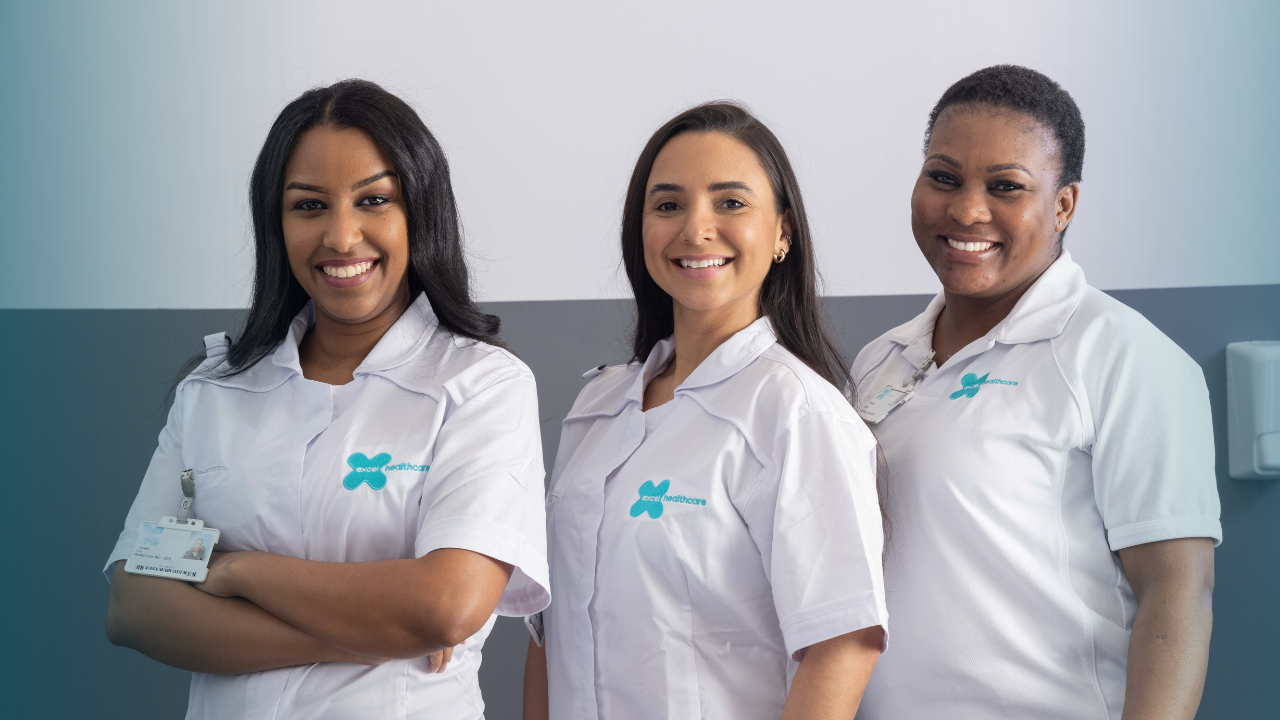
Hospital Nurse

How To Get A Hospital Nurse Job In Ireland

Want to work as a nurse in hospitals in Ireland?

Do you have previous hospital experience as a nurse outside of Ireland and are now in Ireland seeking similar opportunities?

Here is how to get a hospital nurse job in Ireland:

For many nurses, their first job in Ireland is often in a nursing home or residential care setting. Transitioning to hospitals and clinics can initially be challenging.

To work in these environments, you’ll need to either hold a Stamp 4 (or be in the process of obtaining one) or have an EU passport.

By working with Excel through agency nursing shifts, you can gain valuable experience across various settings, including acute hospital environments.

To best prepare yourself here is a list of some courses which will help you in this process:

  • Venepuncture, Cannulation, and IV Management: Venepuncture and cannulation are essential skills in a hospital setting. These techniques are critical for establishing vascular access or collecting blood samples for various tests, as well as for administering IV fluids and medications. Mastery of these skills is a clinical priority for registered nurses. In Ireland, several providers offer courses on venepuncture and cannulation, making them highly beneficial for nurses aiming to work in hospital environments.
  • INEWS (Irish National Early Warning System): All nurses are required to complete the ‘Introduction to the Irish National Early Warning System (INEWS)’ certification via HSELand. This course emphasises clinical judgment and supports decision-making by helping nurses anticipate and respond to patient deterioration. The INEWS framework guides staff in assessing patients based on vital signs such as: Respiratory rate, SpO₂ and oxygen requirements, Heart rate, Blood pressure, Temperature, and Patient alertness. It prepares healthcare professionals to anticipate, recognise, escalate, respond to, and evaluate signs of patient deterioration. Familiarity and confidence in using the INEWS document are crucial. This training takes approximately 1 hour to complete on hseland.ie.
  • Medication Management: There may be a difference in the type of medications you are dispensing in a nursing home and a hospital. At times, care homes may also use blister packs however this practice is being withdrawn in many places.
    Medications in a hospital come in various forms – tablets, liquids, IVS, inhalers, suppositories, creams and patches as well as different types of injections – SC or IM – registered nurses are required to be competent in administration of all types of medication. The different groups of acute medications may include PPIs, various analgesia, statins, oral anticoagulants, antibiotics, antiarrhythmics, antiemetics, diuretics, immunosuppressants, hypoglycaemics among many others.
    It is vital to note, that some medications require separate monitoring: blood pressure or heart rate before administering certain cardiac medication, checking a patient’s blood sugar level before a meal, while others may require a pre-dose blood test for certain antibiotics or anti-rejection transplant medication.

It is also important to remember the Ten ‘Rights’ of Medicine Administration:

  • Right patient
  • Right reason
  • Right drug
  • Right route
  • Right time
  • Right dose
  • Right form
  • Right action
  • Right documentation
  • Right response

Excel is here to support you in completing these courses and can also help you secure an acute hospital job in your area. Transitioning from a nursing home to an acute setting can be challenging, so we recommend starting with a few agency shifts in hospital environments through Excel. This approach allows you to gradually adjust and become familiar with the differences in settings.

For more information about working as a hospital nurse or booking the courses mentioned above, please contact 01 871 7666. Dagmara, a qualified nurse at Excel, is available to guide you through your journey.


Critical Skills Employment Permit Changes

Changes to the Critical Skills Employment Permit

As of the 2nd September 2024 the Critical Skills Employment Permit duration has been reduced from 24 months to 9 months.

Here’s what you need to know: 

When you are changing jobs, you can change employers within the same occupation classification without needing a new permit application. This means if you’re a Healthcare Assistant (HCA),  you can move to a different HCA role, if you are a nurse, you can move into another nurse role.  

From September any nurse or healthcare professional hired under a critical skills Visa can request a change in employer after 9 months of employment.  

The following conditions apply: 

  • As the permit holder, you can make a maximum of 3 applications for a change of employer. 
  • A new contract of employment signed by both you and your new employer must be submitted. 
  • You must start employment with your new employer within 1 month of the new permit being issued. 

You will be eligible for Stamp 4 after 21 months of working in Ireland. When you are on Stamp 4 you can change jobs without needing this employment permit. 

Ensure you meet these requirements to comply with the updated permit rules.  

For more information, click here.

If  you are looking for your next HCA or Nursing opportunity call us on 01 871 7666. Or email info@excelhealthcare.com for a call back.  

Nurses Student Webinar Excel Healthcare

View Our Free Nursing Student Webinar

Excel’s Nursing Student Webinar

  • Are you a nursing student? unsure about what’s involved in placements, have queries on interviews and permanent jobs or want to know more about career progression?
  • Click the download button below if you missed our live webinar on the 27th February 2024. Don’t miss out!
  • Claire Timmon, Head of the Healthcare department with over 10 years recruitment experience chats through coaching students on interviews, assisting with job opportunities, salary and packages offered by the HSE and private healthcare facilities and much more.
  • Guest speaker Dagmara has 2 years experience working as a general nurse within the HSE and guides students through supports and career progression.

What we discussed?

  • Placement options, what’s involved and what to expect
  • CV guidance and tips
  • Interview preparation and mock interviews
  • HSE and private job offers and salary information
  • Paid job opportunities while studying
  • Difference between agency work and permanent jobs
  • Top tips to increase your chances of getting your preferred job
  • And much more


Click HERE to view the webinar.

Click HERE to email Claire for free CV editing and advice.

Click HERE to download our Excel Healthcare Salary Guide. 


Free nursing student webinar

Free nursing student webinar

FREE STUDENT WEBINAR

Are you a nursing student?

Are you unsure about what’s involved with placements and career development?

Need help with interviews and updating your CV?

Excel Healthcare are hosting a FREE webinar with guest speakers, Tuesday 27th February at 7.30pm. We invite all students from Ireland and the UK studying nursing to attend.

What will be discussed?

  • Placement options, what’s involved and what to expect
  • CV guidance and tips
  • Interview preparation and mock interviews
  • HSE and private job offers and salary information
  • Paid job opportunities while studying
  • Difference between agency work and permanent jobs
  • Top tips to increase your chances of getting your preferred job
  • And much more

Click HERE to sign up.

Qualified as a nurse in the EU? Looking to relocate to Ireland to work as a nurse? Here's how

Qualified as a nurse in the EU? Looking to relocate to Ireland to work as a nurse? Here’s how.

First, it is important to register as a nurse in the country in which you qualified. You will need to be on the register there before you start the process of relocating.

The most important step is passing the English exam. The English exam can be tough and has low pass rates first time round, so ensure you take a free English assessment before you book it. Here are two options:

There are 2 types of English tests that you can do. IELTS is the cheapest option but tends to be harder and has lower pass rates (around €200). OET is easier to understand and communicate with as they train you as a healthcare professional utilising healthcare language (around €360).

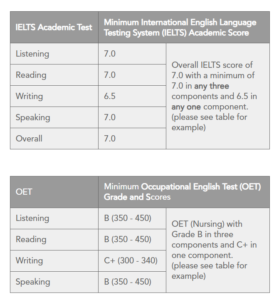
Minimum scores accepted by the Nursing and Midwifery Board of Ireland (NMBI) are below:

Minimum IELTS and OET scores accepted by NMBI

Please note that:

  • NMBI only accept IELTS/OET test results that are less then two years old. If your test results are out of date, you will need to re-sit IELTS/OET
  • NMBI will independently verify your scores
  • NMBI only accept one test result and do not accept combined results
  • NMBI do not accept IELTS One Skill Retake
  • NMBI do not accept IELTS online or OET at home

After passing the English exam you can then register on the NMBI website and upload your documents. Once you have your PIN and pay the fee it is very easy to get a job in Ireland.

For more information get in touch with us today 01 871 7666 or email info@excelhealthcare.com. You can view all of our live nursing roles here.

nurses

How to become a nurse in Northern Ireland?

Nurses provide care across a variety of social and clinical settings. Both public and private healthcare in Northern Ireland is always in great demand for nurses in all disciplines.

To practice nursing in Northern Ireland you have to be registered with the Nursing and Midwifery Council (NMC), the regulatory body for nursing and midwifery. This can be done once you have gained your nursing degree.

If you come from overseas and you wish to practice nursing in Northern Ireland, you have to go through the process of qualifications recognition to get registered with the NMC.

To get registered as a nurse in Northern Ireland, please advise the NMC website as you will need to complete International English Language Testing System (IELTS) and OSCE.

If you are an experienced or newly registered nurse in Northern Ireland and wish to work with us or take up a few extra shifts, don’t hesitate to reach out to us for a confidential chat.

Working with Excel Healthcare will give you an opportunity to practice nursing and gain confidence in different settings (hospitals, hospices, nursing homes). You will have the great advantage of flexibility as you can choose the days and hours you want to work. Whether the area you are passionate about is the care of the elderly, general nursing, or mental health, we will make sure to find the perfect match for you.

In addition to the NMC registration, you will need the following certificates:

  • Basic life support/First Aid
  • Infection Control
  • Moving and Handling
  • Medication Management
  • Safeguarding of Vulnerable Adults
  • DOLS

Our healthcare team has a number of roles available across Northern Ireland and the Republic of Ireland and is ready to assist you on the way to securing new job opportunities.

Get in touch with us to register your interest.

Nurses

How to become a nurse in Ireland?

Nurses provide care across a variety of social and clinical settings. Both public and private healthcare jobs in Ireland are always in great demand within all disciplines.

To become a nurse in Ireland, you have to be registered with the NMBI, the regulatory body for nursing. This can be done once you have gained your nursing degree (applicants from Ireland can register as candidates before they finish their degree).

If you come from overseas and you wish to practice nursing in Ireland, you have to go through the process of qualifications recognition to get registered.

To get registered as a nurse in Ireland, please contact the NMBI.

If you are an experienced or newly registered nurse in Ireland and wish to work with us or take up a few extra shifts, don’t hesitate to reach out to us for a confidential chat.

Working with Excel Healthcare will give you an opportunity to practice nursing and gain confidence in different settings (hospitals, hospices, nursing homes). You will have the great advantage of flexibility as you can choose the days and hours you want to work. Whether the area you are passionate about is the care of the elderly, general nursing, or mental health, we will make sure to find the perfect match for you.

In addition to the NMBI registration, you will need the following certificates:

  • Children First
  • Infection Control
  • Patient Manual Handling
  • Medication Management
  • Safeguarding of Vulnerable Adults

We provide a range of training services which you can view by clicking clicking ‘training services’.

Our healthcare team has a number of roles available and is ready to assist you in securing new job opportunities.

Get in touch with us to register your interest.